
 Back

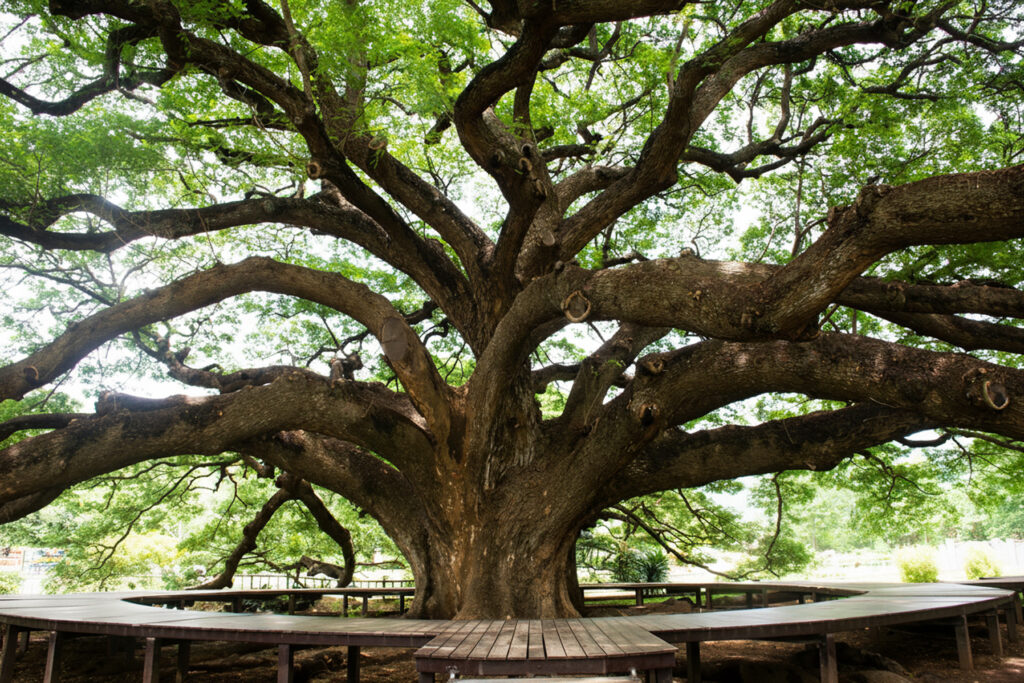
The banyan tree Hawaii visitors often encounter in parks and historic areas is known for its impressive size, spreading branches, and unusual aerial roots. These remarkable trees often leave visitors curious about their origins and history. If you’ve come across one of these trees and have questions about it, you’re in the right place.
In this article, we’ll explore the origins of banyan trees, how they grow, and why they’re an interesting part of Hawaii’s landscape. Banyan trees originated in India; they were introduced to Hawaii and have become familiar landmarks.
The famous Lahaina Banyan Tree on Maui was planted in 1873 and survived the 2023 wildfires, though recovery and restoration work continues. Today, banyan trees can be found in parks and historic areas across Hawaii.
Let’s learn more about banyan trees in Hawaii, their growth, their uses, and some of the most famous examples we found.
What Makes Banyan Trees Unique?
Hawaiian Banyan trees stand out because of their size and unusual growth patterns. Some can spread across large areas, with branches extending outward and aerial roots growing down to the ground. Over time, these roots can form additional trunks, making a single tree look like a small grove.
Here are a few things that make banyan trees special:
- Wide Canopies: Their branches can spread over a large area, providing plenty of shade.
- Aerial Roots: Roots grow down from the branches and can develop into additional trunks when they reach the ground.
- Food for Wildlife: Banyan trees produce small figs that provide food for birds and other animals.
- Impressive Size: Some banyan trees cover several acres, making them remarkable examples of how widely a tree can spread.
One famous example is Thimmamma Marrimanu in Andhra Pradesh, India. It is recognized by Guinness World Records as the world’s largest banyan tree by canopy coverage. Its many aerial roots and extensive branches make it look like a forest of its own.
Banyan trees in Hawaii are also admired for their size and shade. Their distinctive branches and roots make them easy to recognize, even if you’ve never seen one before.
Handpicked condos, beachfront homes and family villas — exclusively curated for travelers who want to skip the guesswork.
Browse Our Hawaii Vacation Rentals and Find the Stay That’s Perfect for You

Origins and Journey of Banyan Trees to Hawaii
Even though banyan trees are common in Hawaii today, they originally came from other parts of the world, including India.
The famous Lahaina Banyan Tree on Maui was planted on April 24, 1873. It was planted by Sheriff William Owen Smith to mark the 50th anniversary of the arrival of the first Protestant missionaries in Lahaina. The tree was brought from India and was only about eight feet tall when it was planted.
Since then, banyan trees have become a familiar part of Hawaii’s landscape. Their ability to grow in warm conditions has helped them thrive on the islands.
Do Banyan Trees Grow Well in Hawaii’s Climate?
Yes, they do grow pretty well. Banyan trees adapt well to Hawaii’s warm, tropical climate. Their growth is supported by:
- Warm Temperatures: Banyan trees grow well in warm conditions.
- Sunlight: Plenty of sunlight supports their growth.
- Rainfall and Moisture: Water helps the trees grow and develop their aerial roots.
These conditions allow banyan trees to spread their branches and roots widely. As their aerial roots reach the ground, they can develop into additional trunks, helping the tree cover a large area.
However, the growth of a banyan tree also depends on its species, the amount of space available, and the conditions in which it grows.
Why Are Banyan Trees Often Called “Strangler Figs”?
Banyan trees are often called “strangler figs” because of the way some species grow.
They can begin life as epiphytes, which means they grow on another plant rather than directly in the soil. Their roots gradually grow downward toward the ground, while their branches spread around the host tree.
As the banyan grows, its roots and branches may surround the host tree and compete with it for light and space. In some cases, the host tree eventually dies, leaving the banyan standing in its place.
This unusual growth pattern is one reason banyan trees are so interesting to observe. Not every banyan tree starts this way, though. Some grow directly in the ground, depending on the species and growing conditions.
Explore by Area
Browse Hawaii Vacation Rentals

Banyan Tree’s Adaptation to the Hawaiian Environment
Hawaii Banyan trees have an interesting way of growing that helps them support their large branches.
Many banyans develop aerial roots that grow down from their branches toward the ground. When these roots reach the soil, they can thicken and become additional trunks. This gives the tree extra support as it continues to spread.
The number of aerial roots can vary depending on the species and growing conditions. Trees growing in suitable warm, moist environments may develop many roots, while others may have fewer.
This is why some banyan trees look like a collection of connected trunks rather than one tree with a single trunk.
Uses of Banyan Trees
Banyan trees have several uses in the places where they grow. Their large branches provide shade, while their figs offer food for birds and other wildlife. Some traditional uses of banyan trees include:
- Shade and Public Gathering: The massive canopy and spreading prop roots create natural, cool shaded areas in public parks and squares.
- Landmarks and Tourism: Historic trees draw visitors and serve as centerpieces for towns and parks, such as the famous Lahaina Banyan Tree on Maui, the banyans at Iolani Palace and Thomas Square in Honolulu, and Banyan Drive in Hilo.
- Ecosystem Support: They act as habitats and food sources for local bird species and support a unique interlocking root architecture.
- Ayurvedic and Traditional Uses: Traditional Ayurvedic medicine uses banyan bark, leaves, and latex for health remedies (such as skin or digestive support).
These uses vary by region and tradition. In Hawaii, the trees are also valued for their size, shade, and place in the landscape.
Are Banyan Trees in Hawaii Protected?
Yes, some banyan trees in Hawaii receive legal protection as Exceptional Trees. Hawaii has laws that allow certain trees to be protected because of their size, age, historical importance, or other special qualities. In Honolulu, Indian banyan trees in Kapiʻolani Regional Park are among the trees listed under local Exceptional Tree protections.
This protection helps prevent the removal or destruction of trees that are considered important to the local environment and community.
However, this does not mean that every banyan tree in Hawaii automatically receives the same legal protection. The status depends on the tree and the applicable local regulations.
If you’re planning to explore Honolulu and its surrounding attractions, you can also browse Oahu vacation rentals to find a place to stay during your trip.
However you want to spend your week in Hawaii, we'll match you with the right beachfront condo, family home or villa — and a local expert who actually knows the island.
Let Aloha Find You a Home
Famous Banyan Tree Spots in Hawaii
Banyan trees can be found in different parts of Hawaii, including parks, gardens, and historic areas. Some are especially well known because of their size and history.
The Lahaina Banyan Tree
The Lahaina Banyan Tree is one of the most famous examples of a banyan tree Hawaii visitors recognize, particularly because of its remarkable history and enormous canopy. It was planted on April 24, 1873, and grew from a small sapling into a tree more than 60 feet tall, with branches and aerial roots spreading across a large area.
Before the 2023 Maui wildfires, the tree was a popular gathering place. Its broad canopy provided shade for visitors, and the area around it regularly hosted community events and art displays.
The August 2023 wildfires severely affected Lahaina and damaged the tree. However, the banyan survived, and arborists and volunteers began caring for it soon after the fire. Signs of life appeared in its branches and trunks, giving the community hope for its recovery.
If you’re planning to visit the tree, check the latest local updates before heading there. Lahaina has been gradually reopening following the wildfires, but the reopening of nearby streets does not necessarily mean Banyan Tree Park is open for public access. Follow posted signs and local guidance, and do not enter any restricted areas.
Banyan Trees in Kapiʻolani Regional Park
Kapiʻolani Regional Park in Honolulu is another place to see banyan trees. Located near Waikiki and Diamond Head, the park has several notable Indian banyan trees listed under Honolulu’s Exceptional Tree protections.
The park is a good place to enjoy Hawaii’s outdoor scenery, take a walk, or spend some time under the shade of large trees. If you’re exploring Honolulu, it can be a useful stop to include in your day.
Where Do Banyan Trees Grow?
Banyan trees grow in warm regions around the world, particularly in tropical and subtropical climates.
The Indian banyan, Ficus benghalensis, is native to the Indian subcontinent. Different species of banyan and other fig trees can be found across parts of Asia, Australia, and other tropical regions.
These trees have also been introduced to places outside their native range, including Hawaii, where suitable growing conditions allow them to thrive.
In Hawaii, banyan trees are commonly seen in parks, gardens, and public spaces. Their broad canopies and aerial roots make them distinctive features of the landscape.
World’s Largest Banyan Tree
The world’s largest banyan tree by canopy coverage is Thimmamma Marrimanu, located in Andhra Pradesh, India. According to Guinness World Records, its canopy covers approximately 2.19 hectares, or 5.41 acres.
The tree is known for its enormous spread and its many aerial roots, which grow down from the branches and form additional trunks. These roots allow the tree to cover a very large area, making it look more like a forest than a single tree.
Thimmamma Marrimanu is a remarkable example of how large a banyan tree can grow under suitable conditions. Its extensive canopy and thousands of supporting roots make it one of the most impressive trees in the world.
Another famous giant banyan is the Great Banyan, located in the Acharya Jagadish Chandra Bose Indian Botanic Garden near Kolkata, West Bengal. Its canopy covers approximately 4 acres, making it one of the largest and best-known banyan trees in the world.
Both trees show how banyans can spread far beyond the size of an ordinary tree, with aerial roots supporting branches across an enormous area.
Final Thoughts
Banyan trees hold a special place in Hawaii’s landscape. Originally brought from other parts of the world, these trees have adapted well to the islands’ warm climate and are known for their wide branches, aerial roots, and impressive size.
The Lahaina Banyan Tree remains one of Hawaii’s best-known examples. Although the 2023 wildfires damaged it, the tree survived and continues to receive care as it recovers. Other banyan trees, including those in Honolulu’s parks, also give visitors an opportunity to appreciate these unusual trees.
If you’re planning a trip to Hawaii, you can explore its parks, historic areas, and beautiful beaches while enjoying a comfortable stay in one of the islands’ vacation homes, condos, or villas. Explore Hawaiian Beach Rentals to find a place that suits your travel plans.
Whether you come across a banyan tree while exploring a park or visiting a historic area, take a moment to look at its branches and roots. You may find that what looks like a group of separate trees is actually one remarkable tree that has continued to grow over many years.