 Back

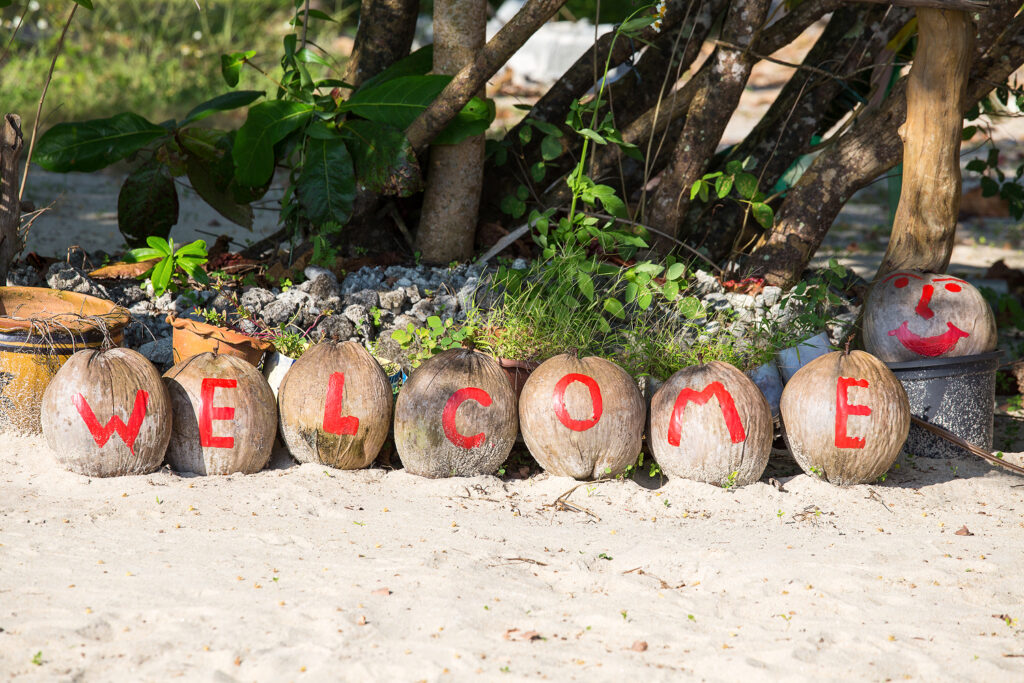
If you want to know how to say “Welcome” in Hawaiian, “E komo mai” is a common expression meaning “come in” or “welcome.” Visitors will also frequently hear words such as aloha (hello, goodbye, love) and mahalo (thank you) throughout Hawaiʻi.
While English is widely spoken throughout the islands, learning a few Hawaiian words can help you understand place names, signs, directions, menus, and greetings you may encounter during your trip. It can also give you a better appreciation of Hawaiʻi’s language and culture.
Here are some common Hawaiian greetings words and phrases that every visitor should know before traveling to Hawaiʻi:
Common Hawaiian Words Every Traveller Should Know
It’s pretty obvious that learning a new language can be challenging, especially when it comes to sentences and complete fluency. That’s why it helps to start with the basics and focus on easy words first.
| Hawaiian Word | Meaning |
| Aloha | Hello, goodbye, love, affection |
| Mahalo | Thank you; gratitude |
| E komo mai | Come in; welcome |
| ʻOhana | Family, relative, kin group |
| Mauka | Toward the mountains; inland |
| Makai | Toward the sea |
| Keiki | Child or children |
| Wahine | Woman/female |
| Kāne | Man/male |
| ʻOno | Delicious; tasty |
| Pūpū | Appetizer; relish; hors d’oeuvre |
| Moana | Ocean; open sea |
| Nalu | Wave; surf |
| Wai | Water; freshwater |
| ʻĀina | Land |
| Paniolo | Hawaiian cowboy |
| Kapu | Forbidden, prohibited, restricted; also sacred |
| Hāpai | Pregnant |
| Mahina | Moon, Moonlight |
| Mau Loa | Forever, eternal |
Handpicked condos, beachfront homes and family villas — exclusively curated for travelers who want to skip the guesswork.
Browse Our Hawaii Vacation Rentals and Find the Stay That’s Perfect for You

Aloha
Meaning: Hello, goodbye, love, affection
Aloha is probably the Hawaiian word most visitors already know. You may hear it when arriving, leaving, greeting someone, or saying goodbye. Its meaning goes beyond a simple “hello” and can also express love, affection, compassion, and goodwill depending on the context.
Mahalo
Meaning: Thank you; gratitude
Mahalo is the Hawaiian way to express gratitude and say thank you. It carries a heartfelt appreciation for acts of kindness or assistance received.
E komo mai
Meaning: Come in; welcome
The meaning of e komo mai is pretty simple. It’s a Hawaiian phrase used to say “welcome.” It invites others to enter or join in a friendly and inclusive manner.
Ohana
Meaning: Family, relative, kin group
ʻOhana refers to family and relatives and can carry a broader sense of familial connection. It is a commonly recognized Hawaiian word that visitors are likely to encounter throughout the islands.
Mauka
Meaning: Toward the mountains; inland
Mauka is particularly useful when getting directions in Hawaiʻi. If someone tells you that a place is on the mauka side, they mean it is toward the mountains or farther inland.
Makai
Meaning: Toward the sea
Makai is the counterpart to mauka and means toward the ocean or sea. Learning mauka and makai together can make local directions much easier to understand, particularly on islands where the mountains and ocean are natural reference points.
Keiki
Meaning: Child or children
Keiki refers to a child or children and is pronounced as “kay-kee”. It is an endearing term used to describe young ones and represents the future generation.
Kāne
Meaning: Man; male
Kāne means man or male. Visitors may encounter the word on restroom signs and in other everyday settings, making it a useful term to recognize while traveling.
Wahine
Meaning: Woman; female
Wāhine means woman or female. Like kāne, it may appear on restroom signs and in other places around Hawaiʻi.
ʻOno
Meaning: Delicious; tasty
ʻOno describes something delicious, pleasing, or tasty. It is a word that’s commonly used to express the enjoyment of delightful food and flavors found in Hawaiian cuisine.
Pūpū
Meaning: Appetizer, finger food, snacks.
Travelers will often encounter pūpū on restaurant menus or at gatherings. In a dining context, it generally refers to appetizers or small dishes served before or alongside a meal.
Moana
Meaning: Ocean; open sea
Moana refers to the ocean or open sea. It is an appropriate word to know in Hawaiʻi, where the Pacific Ocean is an important part of everyday life, recreation, history, and culture.
Nalu
Meaning: Wave; surf
Nalu can refer to a wave or surf. Visitors interested in Hawaiʻi’s beaches and surfing culture may encounter the word in names, businesses, activities, and other ocean-related contexts.
Wai
Meaning: Water; freshwater
Wai means water or freshwater. The word appears in many Hawaiian place names, so recognizing it can also help travelers better understand some of the names they encounter while exploring the islands.
ʻĀina
Meaning: Land
ʻĀina means land and is an important word to understand when visiting Hawaiʻi. Travelers may encounter it in discussions about the islands’ environment, agriculture, communities, and relationship with the land.
Paniolo
Meaning: Hawaiian cowboy
Paniolo refers to Hawaiʻi’s cowboys and is closely connected with the islands’ long ranching tradition. The term is particularly relevant on Hawaiʻi Island, where visitors can learn about paniolo history and ranching culture.
Kapu
Meaning: Forbidden, prohibited, or restricted; also sacred
Kapu is an especially important word for travelers to recognize. You may see it on signs indicating that an area is restricted or should not be entered.
The word also has deeper cultural meanings connected with something sacred or set apart. If you encounter a kapu sign while visiting a beach, trail, cultural site, or other location, respect the boundary and follow posted instructions.
Hāpai
Meaning: Pregnant; to carry
Hāpai can mean to carry, lift, or raise and is also commonly used in reference to pregnancy. The exact meaning depends on the context in which the word is used.
Mahina
Meaning: Moon or moonlight
Mahina means moon and can also relate to the lunar month or phases of the moon depending on context. The moon has long held practical and cultural significance in Hawaiʻi, including in traditional systems for understanding time, fishing, and planting.
Mau loa
Meaning: Forever; eternal; everlasting
Mau loa expresses the idea of something lasting forever or continually. Travelers may also recognize these words from Hawaiian place names, including Mauna Loa, but the two should not be confused: Mauna Loa is the name of the volcano, while mau loa has a different meaning.
Explore by Area
Browse Hawaii Vacation Rentals

Hawaiian Greetings and Useful Phrases
Now that you have learned the essential Hawaiian words, it’s time to delve into Hawaiian greetings. Greetings hold the key to connecting with others and immersing yourself in the spirit of Hawaii. Once you familiarize yourself with these Hawaiian greetings, you get to enhance your ability to connect with the locals and fully experience the culture of the islands. Let’s explore some of the common Hawaiian greetings that will enrich your time in Hawaiʻi:
1. E komo mai i ka hale
Meaning: Come into the house; enter the house
E komo mai i ka hale is a welcoming invitation for someone to enter the home. The shorter e komo mai is also commonly used to express “welcome” or “come in,” which is why visitors may see it at entrances around Hawaii.
2. Pehea ʻoe?
Meaning: How are you?
Pehea ʻoe? is a simple way to ask “How are you?” in Hawaiian. It’s a useful introductory phrase to recognize when learning basic Hawaiian greetings.
3. Hauʻoli lā hānau
Meaning: Happy birthday
Looking to spread joy and celebrate someone’s birthday? Try the phrase “Hauʻoli lā hānau,” which means “Happy birthday.” This cheerful expression conveys your heartfelt wishes for a joyous and memorable celebration, as you join in commemorating their special day and making them feel truly appreciated.
4. A hui hou kākou
Meaning: Until we all meet again
A hui hou kākou is a parting phrase meaning “until we all meet again.” If you simply want to say “until we meet again,” the shorter phrase a hui hou can be used.
5. Aloha ‘oe
Meaning: Farewell to you
This timeless phrase encapsulates the essence of aloha, radiating warmth, love, and deep respect as you bid adieu, leaving a lasting positive impression and carrying the spirit of Hawaiʻi with you.
However you want to spend your week in Hawaii, we'll match you with the right beachfront condo, family home or villa — and a local expert who actually knows the island.
Let Aloha Find You a Home
Hawaiian Language vs. Local Hawaiʻi Expressions
Hawaiʻi has its own local speech traditions, including Hawaiʻi Creole, commonly called Pidgin. For example, “da kine” is associated with local Hawaiʻi speech rather than being a Hawaiian-language word. Its meaning changes with context, and it can stand in for a person, thing, idea, or situation when the meaning is understood by the people speaking.
Likewise, shaka commonly refers to the familiar hand gesture made by extending the thumb and little finger while keeping the middle fingers folded. Travelers will see the gesture throughout the islands as an informal sign of friendliness or acknowledgment.
Understanding this distinction helps visitors appreciate that Hawaiian language and contemporary local Hawaiʻi speech are related parts of life in the islands but are not interchangeable.
Using These Words on Your Trip
The easiest way to benefit from these words isn’t to force them into every conversation. Instead, learn to recognize them in the situations where you’re naturally likely to encounter them.
- Oʻahu: Words such as mauka and makai can be especially useful when navigating Honolulu and other communities because directions may be given relative to the mountains or ocean. If you’re still deciding which part of the island will work best for your trip, see our Where to Stay on Oahu guide before choosing your accommodation.
- Maui: If you visit Upcountry Maui and Makawao, you may come across paniolo, meaning Hawaiian cowboy, because the area is known for its ranching and cowboy history.
- Kauai: When visiting the famous Nāpali Coast, knowing that pali means cliff can help you understand the name and the dramatic landscape you’re seeing.
- Hawaii Island (the Big Island): Around Waimea, you may again encounter paniolo because of the area’s strong ranching history. You’ll also see Hawaiian words throughout the names of beaches, towns, volcanoes, and cultural sites.
The goal isn’t to sound like a local. A better approach is to learn what the words mean, pronounce them thoughtfully, respect their context, and let them help you better understand the places you’re visiting.
Plan Your Stay in Hawaii
Knowing a few Hawaiian words can make everyday moments on your vacation easier to understand, from reading signs and menus to following directions and recognizing greetings.
Once you’ve decided which island you want to explore, choose a home base that fits the way you travel. Hawaiian Beach Rentals lets you compare vacation rentals across Oʻahu, Maui, Kauaʻi, and Hawaiʻi Island, including condos, homes, and beachfront stays.
Explore the platform and find a comfortable home base for your island trip.